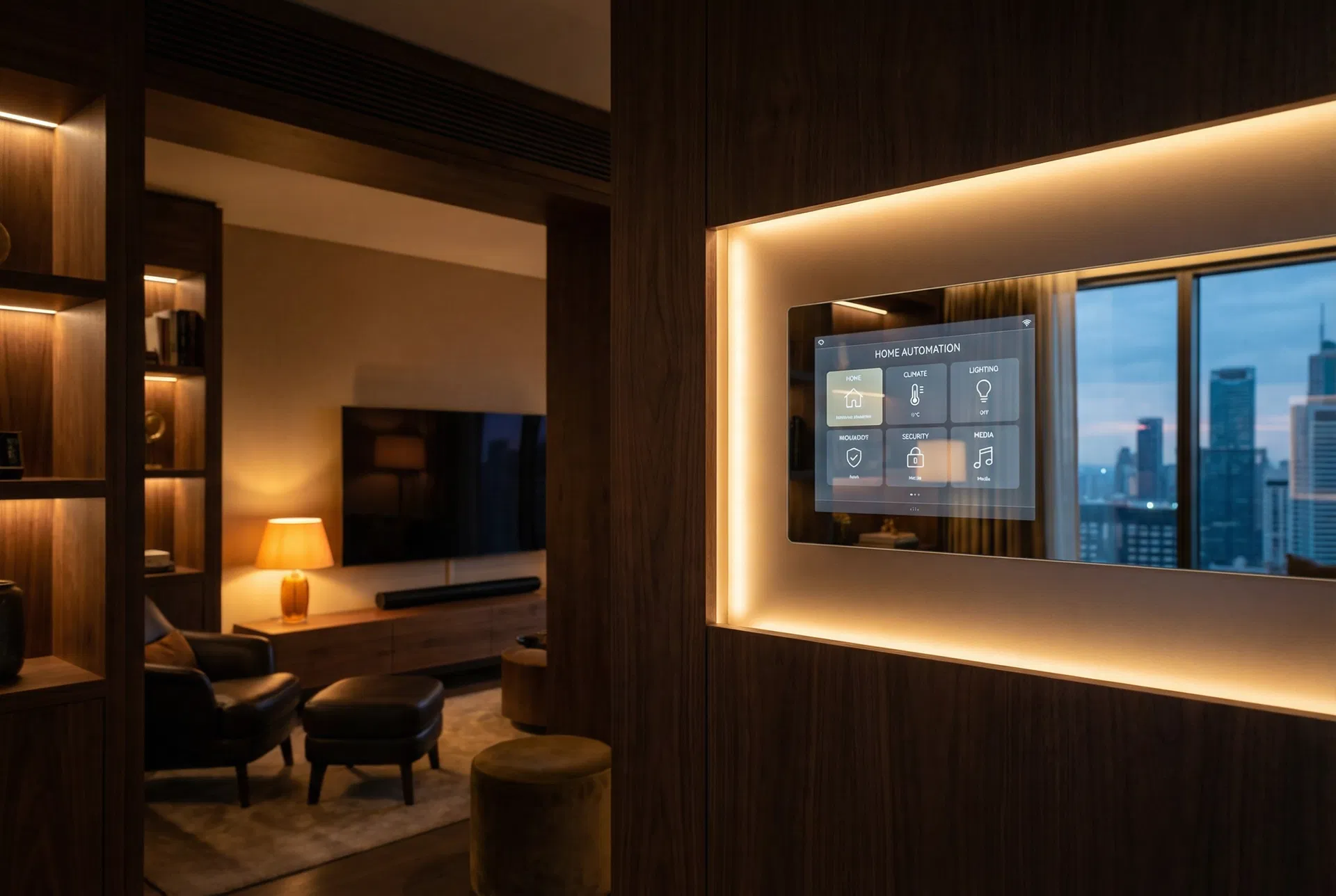
The Hidden Conflict Between Radiant Floor Heating and Smart Thermostat Algorithms
Affiliate Disclosure: This article may contain affiliate links. Luxbrook earns a small commission on qualifying purchases at no additional cost to you. We only recommend products we have independently researched and believe offer genuine value.
Smart thermostats are designed for forced-air systems. Radiant floor heating operates on completely different physics. Running the wrong algorithm in a radiant system wastes energy and creates comfort problems that are nearly impossible to diagnose.
Your ecobee or Nest is making your radiant floor heating worse. Not because the thermostat is defective — it is doing exactly what it was designed to do. The problem is that it was designed for a completely different type of heating system.
Forced-air heating responds quickly. You call for heat, the furnace fires, and within minutes warm air is moving through the house. Smart thermostat algorithms are built around this response time. They use predictive scheduling, occupancy detection, and learning algorithms that assume a system can heat a space in 15–30 minutes.
Radiant floor heating operates on a thermal mass principle. The floor slab — whether concrete, gypcrete, or a thin-slab system — absorbs heat slowly and releases it slowly. A typical 4-inch concrete slab takes 2–4 hours to reach equilibrium after a setpoint change. The floor continues radiating heat for hours after the system shuts off.
What Goes Wrong
When a smart thermostat runs its standard algorithm on a radiant system, several problems emerge:
First, the thermostat reads the air temperature, not the floor temperature. The air in a radiant-heated room can feel cool while the floor is still warm and actively heating the space. The thermostat calls for more heat. The floor overheats. The room becomes uncomfortably warm 3 hours later. The thermostat shuts off. The cycle repeats with wild swings instead of the steady comfort radiant systems are supposed to provide.
Second, setback scheduling — the feature that drops temperature overnight to save energy — is actively counterproductive in radiant systems. Dropping the setpoint by 4°F at 10pm means calling for heat at 5am to recover by 7am. In a forced-air system, that is a 2-hour recovery. In a radiant slab system, that recovery can take 6–8 hours, meaning the system runs at full output all night and the floor is still not at target temperature when you wake up.
> The fundamental mismatch between smart thermostat algorithms and radiant heating is not a software bug — it is a physics problem. Radiant systems need outdoor reset control and supply water temperature management, not air temperature setback.
The Specific Solution
The correct control strategy for radiant floor heating is outdoor reset control, not air temperature setback. Outdoor reset adjusts the supply water temperature to the floor based on the outdoor temperature, maintaining a nearly constant floor temperature that tracks the building's heat loss. The result is stable comfort with no swings, and energy savings that come from running at lower supply temperatures rather than from setback.
For hydronic radiant systems, the Tekmar 519 and Uponor Smatrix Base controllers implement outdoor reset natively. These are not smart home devices in the consumer sense — they do not have apps or voice control — but they are the correct control strategy for the physics of the system.
Practical Implementation
1. If you have a hydronic radiant system (hot water in tubing), contact your plumber or radiant contractor about adding an outdoor reset controller. This is a $400–$800 upgrade that will outperform any smart thermostat for radiant comfort and efficiency. 2. If you have electric radiant (resistance heating in the floor), the Warmup 4iE is the only consumer smart thermostat specifically designed for electric radiant. It uses floor temperature sensing rather than air temperature sensing, which is the correct approach. 3. If you insist on using a standard smart thermostat with radiant, disable all setback scheduling and all learning features. Set a fixed temperature and let the system run at constant output. You will lose the energy-saving features but avoid the comfort problems. 4. For new construction with radiant, specify a dedicated radiant controller in the mechanical design before the slab is poured. Retrofitting outdoor reset control is possible but more expensive.
Product Recommendations
The Warmup 4iE Smart WiFi Thermostat is the only consumer-grade smart thermostat that correctly handles electric radiant floor heating. It uses a floor sensor rather than an air sensor, has a dedicated radiant heating mode, and integrates with Alexa and Google Home. For electric radiant, this is the correct product.
For hydronic systems, the Tekmar 519 Boiler Control implements outdoor reset and is the industry standard for residential radiant. It requires professional installation but delivers the stable comfort that radiant systems are designed to provide.
FAQ
Can I use a Nest or ecobee with radiant floor heating? Technically yes, but you should disable setback scheduling and learning features. The algorithms are designed for forced-air systems and will create comfort problems and energy waste in radiant applications.
What is outdoor reset control for radiant heating? Outdoor reset adjusts the supply water temperature to the radiant floor based on outdoor temperature. When it is cold outside, the water runs hotter. When it is mild, the water runs cooler. This maintains stable floor temperatures without setback cycles.
Why does my radiant floor feel cold in the morning? This is almost always caused by a thermostat setback overnight. The floor slab needs 4–8 hours to recover from a setpoint drop. Disable overnight setback on radiant systems.
Is radiant floor heating more efficient than forced air? Yes, when controlled correctly with outdoor reset. When controlled incorrectly with air temperature setback, radiant systems can be less efficient than forced air because of the energy wasted in thermal cycling.
What thermostat should I use for electric radiant floor heating? The Warmup 4iE is the best consumer option. It uses floor temperature sensing, has a dedicated radiant mode, and avoids the air temperature sensing errors that plague standard smart thermostats in radiant applications.
Shop the Article
As an Amazon Associate, Luxbrook earns from qualifying purchases.
Products Mentioned in This Article
Affiliate links · seperts-20
Networking
Eero Pro 6E Mesh Wi-Fi System (3-Pack)
Tri-band Wi-Fi 6E mesh system. Covers up to 6,000 sq ft. Built-in Zigbee hub.

Climate Control
ecobee Smart Thermostat Premium
The most advanced smart thermostat with built-in Alexa and air quality monitor.

Smart Lighting
LIFX A19 Smart Bulb (4-Pack)
Wi-Fi smart bulbs with 1100 lumens, no hub required.
As an Amazon Associate, Luxbrook earns from qualifying purchases at no extra cost to you.
Related Articles
Rate This Article
Discussion
No comments yet — be the first to share your thoughts.